

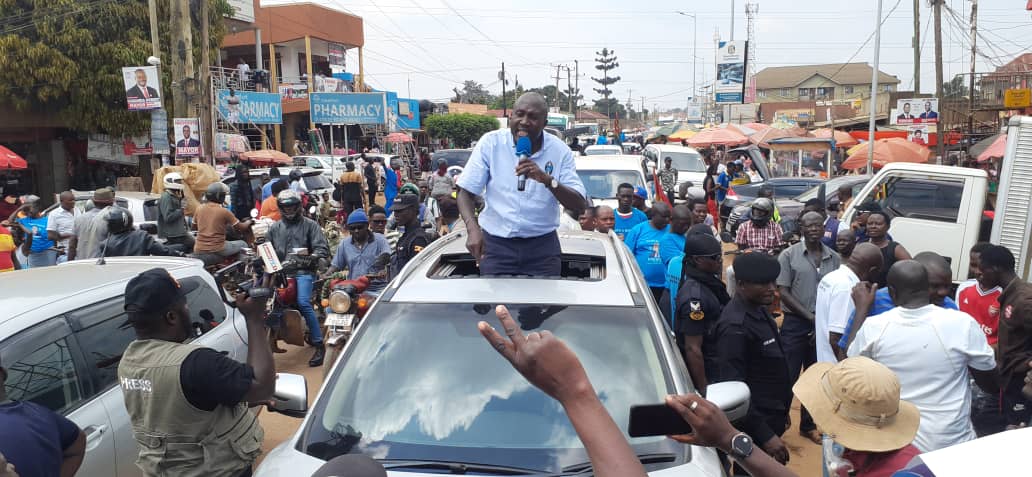
Forum for Democratic Change (FDC) presidential candidate Nathan Nandala Mafabi has accused the government of promoting regional bias, nepotism and corruption, saying the vice has undermined service delivery and locked out many Ugandans from equal access to opportunities.
Nandala made the remarks on Tuesday while campaigning in Mukono District, where he launched his tour in Goma Division, Seeta Town.
Addressing residents, Nandala criticised what he described as discriminatory practices in public service recruitment and the allocation of government scholarships, arguing that positions and opportunities are often awarded on the basis of regional connections rather than merit.
“This discrimination has affected service delivery across the country and must be confronted head-on,” Nandala said, pledging to ensure equitable distribution of national resources if elected president in the 2026 general elections.
The FDC flag bearer also raised concern over the growing influence of money lenders, accusing them of exploiting citizens by confiscating land titles, national identity cards and other personal property.
He faulted the government for failing to revive cooperatives and for imposing high taxes which he said benefit a small clique at the expense of ordinary citizens.
Nandala said his administration would prioritise the revival of cooperatives and establish farmers’ banks to provide affordable credit, particularly for farmers and small business owners struggling to access financing.
He further pledged to prioritise local construction firms in road projects, arguing that Uganda continues to spend heavily on foreign contractors despite the presence of capable local companies.
Meanwhile, the FDC candidate for Mukono Woman Member of Parliament, Nansubuga Vitarine, highlighted challenges facing residents, including rising household debt, exploitation by money lenders and chronic underfunding of Mukono General Hospital.
The party’s flag bearer for Mukono Municipality Member of Parliament, Dunstan Mbogo, raised concerns about the poor state of the Kampala–Jinja highway, describing it as both a safety and economic challenge for the region.
He said frequent accidents along the road have resulted in loss of lives and goods, particularly affecting traders.
